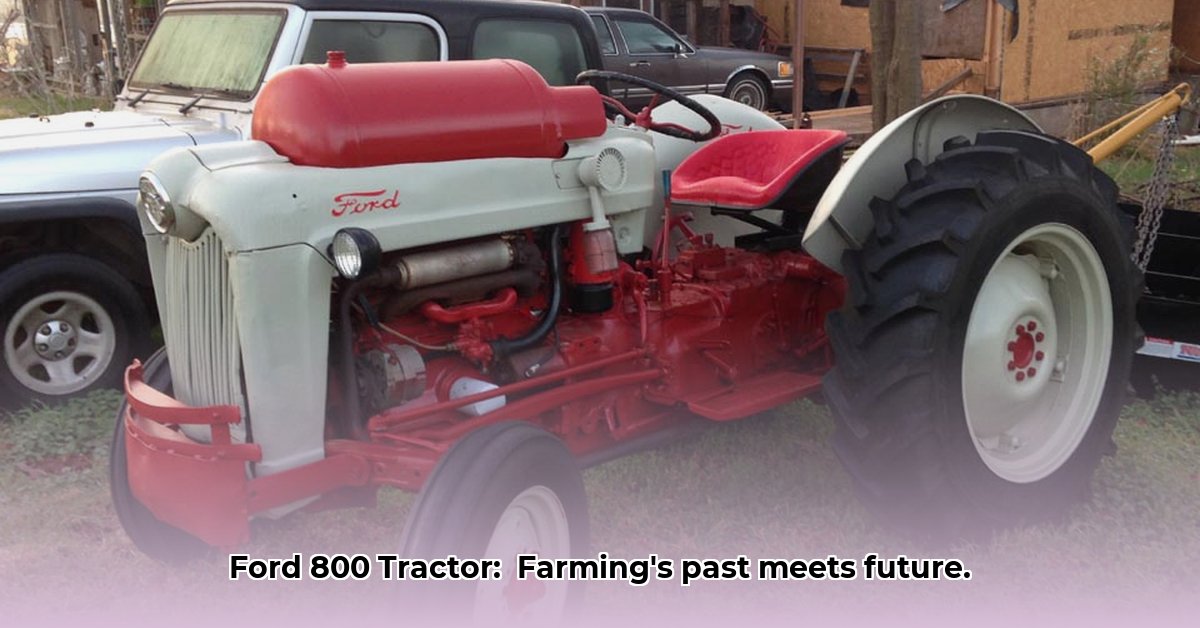
The Ford 800 tractor, a symbol of agricultural mechanization, significantly altered farming practices. But how sustainable was this iconic machine? This article explores its historical impact, acknowledging data limitations while offering actionable recommendations for responsible stewardship of historical agricultural technology. We will examine its contribution to efficiency, compare it to modern sustainable farming practices, and highlight the need for collaborative research to fully understand its environmental footprint. For more on Ford tractors, see this related page.
The Ford 800's Impact: A Historical Perspective
Before the widespread adoption of tractors, farming relied heavily on manual labor and animal power. The introduction of the Ford 800, during a period of rapid mechanization, dramatically increased efficiency. Farmers could cultivate larger areas in shorter times, potentially leading to improved yields. This contributed to increased food production and a shift in agricultural practices. However, quantifying the sustainability of this shift is inherently complex. Detailed records of fuel consumption, emissions, and operational lifespan are largely unavailable for this era.
The Challenge of Measuring Sustainability: Data Gaps and Interpretations
Assessing the Ford 800's environmental impact presents considerable challenges. Crucial data points are missing, such as precise fuel efficiency, greenhouse gas emissions, and lifecycle analysis (LCA) data. This lack of information hinders a complete sustainability assessment, creating a significant obstacle to understanding the true ecological cost of this technological advance. Were farmers of this era primarily focused on maximizing yield, or did factors like long-term soil health also play a significant role? These questions remain difficult to definitively answer without comprehensive historical data.
Comparing Then and Now: Ford 800 vs. Modern Tractors
Modern tractors differ drastically from the Ford 800 in terms of sustainability. They boast significantly improved fuel efficiency, reduced emissions due to advanced engine technologies, and incorporate precision farming techniques like GPS-guided systems that minimize resource use. Advances in no-till farming and optimized fertilizer application further reduce the environmental impact of modern agricultural operations. However, a direct comparison between the Ford 800 and modern tractors requires a comprehensive LCA accounting for the entire lifecycle of each machine, including manufacturing, operation, and disposal. Such an analysis remains largely absent for historically relevant machinery.
Unearthing the Past: A Collaborative Research Effort
To generate a complete understanding of the Ford 800's impact, a collaborative effort is essential. This includes:
Agricultural Historians: These experts can analyze historical records and farm diaries to provide quantitative and qualitative data on the Ford 800's operation and its influence on farming practices. This would significantly improve understanding of its true impact on both yields and resource consumption.
Equipment Collectors and Museums: These entities preserve valuable artifacts and offer physical access to the Ford 800 for detailed analysis. Studying the tractor's design, construction, and materials could reveal significant insights into its longevity and overall sustainability.
Agricultural Engineers and Scientists: Their expertise in modern tractor technology and LCA methodologies is crucial for developing better comparative frameworks. Such comparisons would help provide a broader context for evaluating the historical tractor's impact.
Environmental NGOs and Researchers: These entities can advocate for improved data collection on historical farming equipment and the development of more robust assessment frameworks for historical equipment.
Actionable Recommendations for Sustainable Stewardship
To promote responsible management of historical farm equipment like the Ford 800, the following steps are recommended:
Document and Preserve Historical Data: Historians and collectors should meticulously document operational data, maintenance records, and fuel consumption estimates from available sources, providing crucial insights into the tractor's lifecycle. (Efficacy: Improved data availability for future analysis and a broader understanding of historical impacts).
Develop Comprehensive LCAs: Researchers should prioritize the development of LCA methodologies suitable for historical agricultural technology. This involves adapting current LCA frameworks to account for data limitations inherent in historical machinery (Efficacy: Creation of more reliable comparisons across different eras of agricultural technology).
Promote Responsible Disposal: Establish clear guidelines and incentives for the responsible recycling and disposal of obsolete farm equipment, minimizing environmental consequences (Efficacy: Reduced environmental impact of obsolete equipment).
Educate Stakeholders: Raise awareness among farmers, collectors, and the public about the importance of preserving historical farm machinery responsibly while balancing historical preservation with the environmental implications. (Efficacy: Informed decision-making regarding the use and disposal of vintage machinery).
The Ford 800's Legacy: A Call for Ongoing Research
The Ford 800 tractor, as a case study, exemplifies the pivotal role of mechanization in agriculture. However, accurately quantifying its sustainability requires bridging the significant data gap. Through collaborative research and responsible stewardship, we can paint a more complete picture of its impact, informing sustainable agricultural practices for the future. It’s crucial to remember that understanding the past is a key component in creating a truly sustainable future for agriculture.